Abstract Floral Pattern Redwork
A Designer’s First Glance: Delicate, Suggestive, Quietly Bold
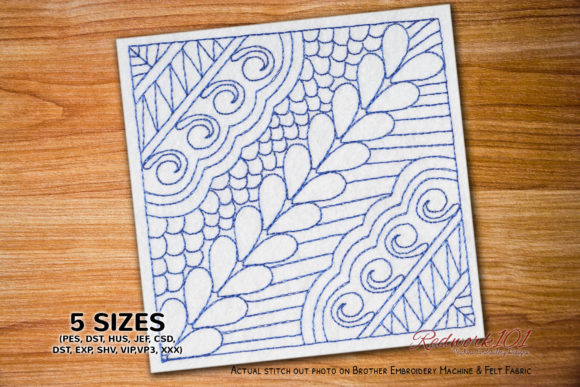
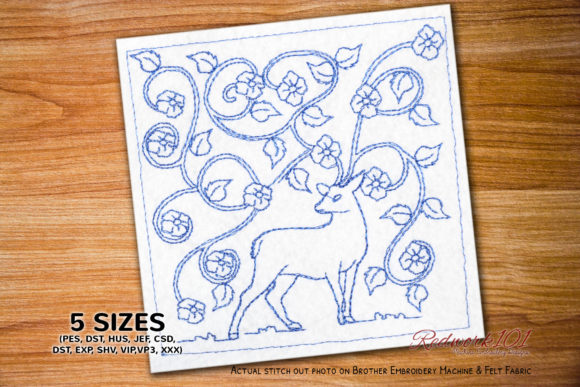
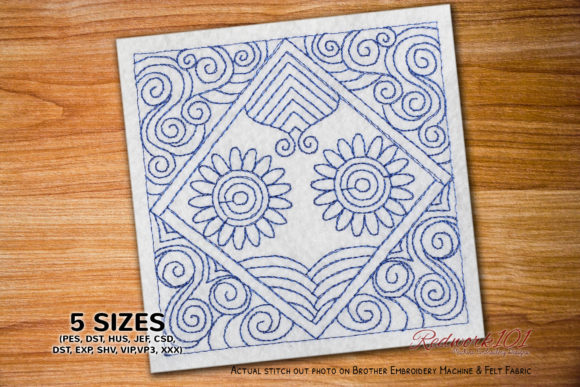
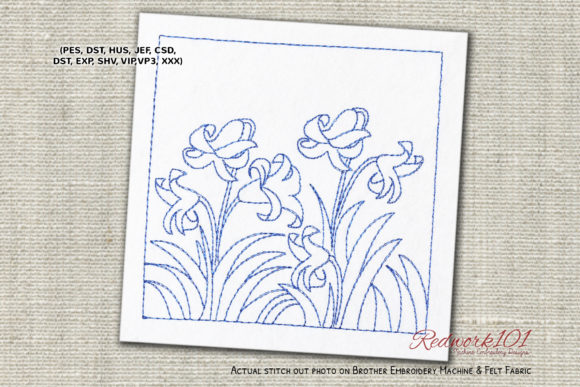
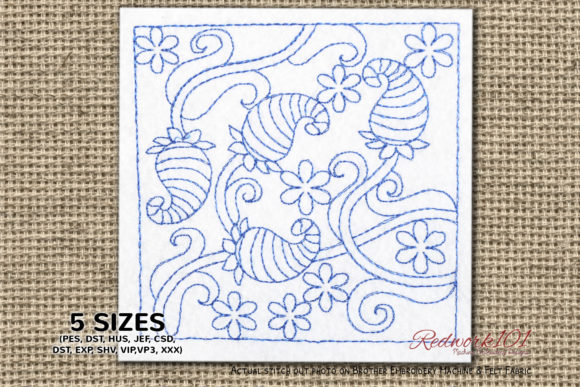
When I opened Abstract Floral Pattern Redwork, I didn’t see a “cute floral”—I saw a mood. The yet-to-bloom flowers—tight buds, unfurling stems, and subtle paisley-inspired curves—feel intentional, not decorative. There’s breathing room in the layout, no visual crowding, and the line work carries that classic redwork simplicity: confident running stitches, clean satin stitch accents where needed, and zero filler fluff. It doesn’t shout. It invites closer looking. That makes it ideal for products where craftsmanship should feel considered—not flashy.
Real Project Test: A Linen Tea Towel for a Local Bakery’s Holiday Line
Last week, I stitched Abstract Floral Pattern Redwork onto a heavyweight natural linen tea towel—part of a small-batch holiday collection for a neighborhood bakery. No appliqué, no dense fill stitches: just crisp red thread on off-white fabric, stabilized with medium tear-away. The result? A finished product that felt heirloom-adjacent—not craft-fair casual. Customers paused at the display. One said, “It looks like something my grandmother would’ve stitched… but modern.” That’s the sweet spot: timeless execution with quiet contemporary rhythm. The design scaled beautifully at 3.8 inches wide—neither lost in the fabric nor overwhelming the towel’s utility.
Where It Shines (and Where to Pause)
Abstract Floral Pattern Redwork excels in contexts where subtlety reads as sophistication:
- Custom apparel: Works cleanly on structured cotton sweatshirts and midweight t-shirts—especially on chest or sleeve placements where the stem flow follows natural garment lines.
- Embroidered patch: Clean outlines and moderate stitch density mean it presses flat and holds shape after sewing onto denim jackets or canvas tote bags.
- Baby embroidery: Gentle curves and open composition avoid visual clutter—perfect for onesies or burp cloths where softness and clarity matter more than detail.
- Holiday embroidery & personalized gifts: Its restrained elegance reads well on monogrammed pillow covers, linen napkins, or nursery wall hangings—no seasonal clichés, just quiet warmth.
- Craft business & Etsy seller appeal: It photographs beautifully in natural light, translates well into printable mockups, and feels premium without requiring complex thread changes or specialty stabilizers.
Use With Intention—Not Assumption
This isn’t a one-size-fits-all machine embroidery design. A few real-world cautions:
- Small hoop sizes: Avoid hooping tighter than 4×4 inches unless you’ve tested the outermost stem ends—they taper finely and may shift or distort if stretched too aggressively.
- Textured or stretchy fabric: On slubbed linen or lightweight knits, use cut-away stabilizer beneath and topping on top. The design’s graceful lines won’t forgive puckering.
- Dark fabric: Red thread loses contrast on navy or charcoal. Try burgundy or brick-red thread instead—or test black-and-white mockups first to gauge silhouette strength.
- Curved surfaces (caps, curved aprons): The central floral motif anchors well, but elongated stems may pull or skew. Consider trimming or repositioning the design to follow the curve—not fight it.
- Frequent washing: If stitching for kitchen towels or baby items, lock thread tails securely and avoid overly dense satin stitch zones—this design leans on running and gentle fill stitches, which is smart for durability.
What It Adds to Your Finished Product—Beyond Aesthetics
Abstract Floral Pattern Redwork quietly elevates perceived value. Because it avoids trend-driven motifs, it doesn’t date quickly—meaning your tote bag design or boutique branding stays cohesive across seasons. Stitched cleanly, it signals attention to proportion and negative space—traits customers associate with handmade quality, not mass production. For Etsy sellers, that translates to higher trust: buyers see intention, not inventory. For apparel decorators, it gives custom sweatshirt embroidery personality without competing with logos or slogans. And for creative entrepreneurs building design assets, it’s versatile enough to adapt—flip it vertically for a cap back, isolate a single bud for a minimalist patch, or layer it softly behind hand-lettered text in a digital embroidery file preview.
Designer Notes You’ll Actually Use
Before cutting fabric or uploading to your machine:
- Test on scrap first—especially if using textured fabric or blending thread colors.
- Review stitch density: This design avoids heavy fill areas, but confirm no tiny interior loops or nested corners that could snag on delicate fabrics.
- Check hoop size compatibility: If your smallest hoop is 3×3, verify the design fits comfortably—don’t force compression.
- Inspect small details: Those unopened flower buds rely on clean stitch starts/stops. Zoom in on your embroidery software to ensure no stray jump stitches.
- Try black-and-white mockups: Helps assess contrast and legibility before committing to thread color.
- Compare light vs. dark backgrounds: What reads gracefully on ivory linen may vanish on deep rust cotton.
- Confirm stabilizer pairing: Medium tear-away works for stable wovens; cut-away is safer for knits or loosely woven tea towels.
- Verify licensing: If selling finished embroidered items or reselling the digital embroidery file, check usage rights—this isn’t stated in the product description, so assume review is required.
Final Thought: A Design That Listens
Many embroidery files demand attention. Abstract Floral Pattern Redwork earns it—by leaving space, honoring line, and trusting the viewer’s eye. It’s not background noise. It’s a quiet conversation between thread, fabric, and intention. Whether you’re stitching a single personalized gift or building a cohesive line of small shop products, this design supports your voice instead of overriding it. That’s rare. And worth the extra five minutes of testing.