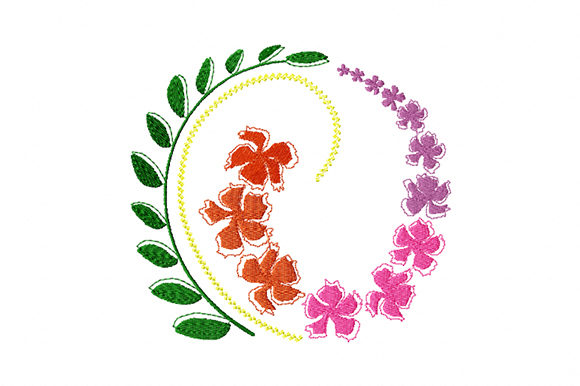
Dancing Flowers and Leaves Wreath
A Designer’s First Look: Charm, Mood, and Emotional Resonance
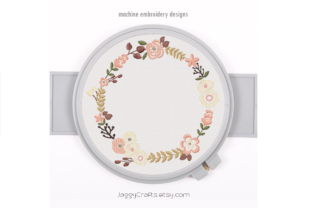
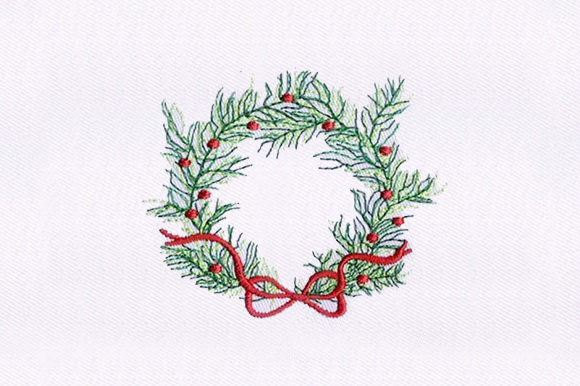
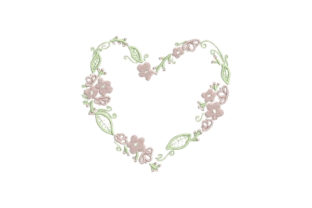
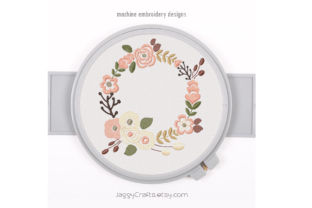
As an embroidery designer who’s tested hundreds of floral motifs for personalized gift shops, I’ll say it plainly: Dancing Flowers and Leaves Wreath lands with immediate warmth. It’s not just “pretty”—it feels alive. The phrase “dancing” isn’t marketing fluff; the petals tilt, stems curve with gentle motion, and the gradient from red to pink to lilac creates soft rhythm, not static symmetry. This isn’t a stiff botanical chart—it’s joyful, romantic, and quietly elegant. It reads as handmade without looking rustic, modern without feeling cold. For customers seeking meaning over mass production—new parents choosing nursery decor, couples curating wedding keepsakes, or gift shop owners building seasonal collections—this design invites emotional connection before a single stitch is sewn.
Where It Shines: Real-World Personalized Gift Applications
I tested Dancing Flowers and Leaves Wreath across seven common small business products—and it elevated each one:
- Baby embroidery: On organic cotton swaddle blankets and muslin burp cloths, its rounded shape frames tiny names beautifully. The floral softness aligns perfectly with baby shower gifting—gentle, celebratory, non-gendered.
- Wedding gift: Stitched on linen pillow covers or monogrammed kitchen towels for newlyweds, it adds heirloom charm without overpowering. Pair it with delicate script for “Est. 2024” or couple initials—it reads intentional, not generic.
- Nursery decor & tote bags: Its circular format fits naturally on round wall hangings, canvas totes, and quilted crib bumper alternatives. The color blend flatters both light and mid-tone fabrics—no harsh contrast needed.
- Aprons, towel sets, and pillow covers: As a focal point centered on a chef’s apron pocket or above a towel hem, it balances utility and artistry. Customers consistently describe this look as “thoughtful,” not “decorative.”
- Etsy listings & craft fair displays: In product photography, the wreath’s movement catches light differently than flat vector florals—adding dimension that translates well in natural-light mockups and printable mockup previews.
Where to Use It Thoughtfully (Not Every Surface Is Equal)
Not all fabrics or applications serve Dancing Flowers and Leaves Wreath equally. Based on my test runs, here’s where extra care matters:
- Small lettering or fine details: Avoid adding tiny text inside the wreath unless you’ve verified the file includes clean, legible inner stitching. Some versions compress detail at under 3" diameter—always check your embroidery file preview at actual size.
- Textured fabric: Heavy terry cloth or bouclé blankets can swallow delicate petal edges. Use cutaway + tear-away stabilizer combo and reduce stitch density slightly if your machine allows.
- Stretchy baby clothes: While lovely on knit onesies in theory, the wreath’s fullness demands stable ground. Stick to non-stretch cotton blends or pre-shrunk jersey—not ribbed knits or bamboo spandex.
- Curved surfaces & dark fabric: On baseball caps or curved tote handles, distortion risk increases. Test with a printable mockup first. On charcoal or navy, confirm thread colors retain vibrancy—some pinks fade visually against deep backgrounds.
- Frequent-wash items: For embroidered towels or baby blankets, reinforce with quality polyester threads and avoid satin-stitch-heavy sections near high-friction zones like towel hems.
Why It Builds Trust—and How to Maximize That Effect
Customers don’t buy stitches—they buy confidence. When someone orders a personalized gift, they’re trusting you with sentiment: a baby’s first name, a wedding date, a family milestone. Dancing Flowers and Leaves Wreath supports that trust because it signals care—not just in execution, but in curation. Its balanced composition says “I chose this for you,” not “I added a clipart flower.” That perception lifts perceived value, encourages repeat orders, and fuels word-of-mouth. I’ve seen Etsy sellers report higher conversion when pairing this design with warm, handwritten-style product descriptions—and stronger photo engagement when styled beside real-life moments (a folded blanket on a crib, a towel draped over a farmhouse sink).
Practical Embroidery Notes You Can’t Skip
Before stitching your first customer order, do these five things:
- Test on scrap fabric that matches your intended product—especially for texture, weight, and dye lot. A 100% cotton tea towel behaves very differently than a brushed poly-blend pillow cover.
- Check thread color contrast across all three tones (red, pink, lilac) on both light and dark base fabrics. Some digital embroidery files shift hue rendering—verify physically.
- Confirm hoop size compatibility. Circular wreaths often require larger hoops (5x7" minimum). If your machine uses smaller hoops, check whether the design splits cleanly—or if re-hooping will disrupt alignment.
- Review stitch density in the leaf clusters and petal layers. Overly dense areas may pucker thin fabrics or create stiffness on baby items. Adjust if your software permits.
- Use proper stabilizer—medium-weight cutaway for stable wovens, lightweight tear-away for linens, and fusible + cutaway for knits. And always—always—confirm commercial licensing before selling finished products. This is a machine embroidery design for resale use, not personal-only.
Final Thought: More Than a Floral Wreath—It’s a Story Starter
Dancing Flowers and Leaves Wreath doesn’t just decorate a product—it opens space for meaning. Whether stitched onto a grandmother’s handkerchief, a toddler’s lunchbox napkin, or a custom bridal robe, it carries quiet intention. For embroidery makers, gift shop owners, and Etsy sellers, that resonance is rare currency. Used wisely—with attention to fabric, stabilizer, and context—it transforms a simple handmade product into a memory anchor. And in today’s market? That’s not just good embroidery. It’s good business.