Cherry Blossoms Tattoo Embroidery Design
A Thoughtful Review for Small Business Merch & Branded Patches
As an embroidery designer who’s developed and tested hundreds of machine embroidery designs for small business clients—from neighborhood cafés and florists to handmade pet brands and boutique studios—I approached Cherry Blossoms Tattoo with a practical eye: not just “does it look pretty?” but “does it work hard for a brand?” This isn’t decorative fluff—it’s a functional embroidery file meant to carry identity, consistency, and craftsmanship across real-world applications. And yes, it delivers—when used intentionally.
First Impression: Elegant, Timeless, and Quietly Confident
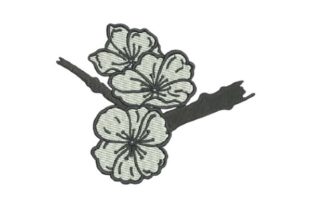
The name Cherry Blossoms Tattoo immediately signals something beyond generic floral—it hints at artistry, intention, and quiet symbolism. It doesn’t shout; it invites. Visually, this design reads as elegant and modern-classic: delicate branches, balanced petal weight, and organic flow without excessive fuss. It avoids looking overly ornate or cartoonish—critical when your embroidered patch appears on a linen apron at a ceramic studio or stitched onto the chest of a barista’s uniform. That balance makes it versatile across industries: a bakery can lean into its softness, a creative agency into its refined line work, and a botanical skincare brand into its natural authenticity.
Real-World Performance Across Business Applications
In practice, Cherry Blossoms Tattoo shines where subtlety and recognition matter most. As an embroidered patch, it holds up beautifully on twill, denim, and canvas—especially when backed with medium-weight cutaway stabilizer. On staff uniforms or aprons, it reads clearly at 2.5–3 inches wide, offering enough detail to feel special without overwhelming the garment. For cap embroidery, position it slightly off-center on the front panel (not too high) to preserve the branch’s natural arc—its open composition avoids the crowding that plagues dense bouquets.
On tote bag designs, it works best as a single focal point near the top seam or centered on the flap—not repeated in rows. Its asymmetry gives movement, which helps counteract the static nature of large fabric surfaces. For custom apparel like relaxed-fit tees or work shirts, pair it with minimal text (e.g., a tiny shop name beneath) to keep hierarchy clean. And for product packaging accents—think cotton drawstring bags or branded gift tags—it translates well into a subtle, tactile signature that reinforces handmade product integrity.
Where to Use Cherry Blossoms Tattoo With Care
This design is elegant—but elegance requires attention. Avoid shrinking it below 1.75 inches for patches or cap fronts: fine branch tips and petal separation begin to blur, risking a muddy finish on dark uniforms or textured fabrics like heavy canvas or corduroy. High stitch density in the flower clusters means stabilizer choice is non-negotiable—skip tear-away on knits or lightweight linens; opt for lightweight cutaway instead. Also, test contrast carefully: pale thread on charcoal twill may lose definition unless you increase underlay or adjust density in your embroidery software.
Curved surfaces—like the front of a structured cap or the rounded seam of a tote handle—demand hooping precision. The design’s gentle curve flows naturally, but misalignment exaggerates distortion. And while Cherry Blossoms Tattoo belongs firmly in the Bouquets category, it’s not a filler motif: its thoughtful spacing and breathing room mean it shouldn’t be crammed beside logos or dense text blocks. Let it breathe—or risk diluting its impact.
How It Strengthens Brand Identity & Customer Trust
Small businesses thrive on authenticity—and Cherry Blossoms Tattoo supports that instinctively. Unlike clip-art florals, it carries visual weight and narrative resonance. When stitched onto an apron at a local florist or embroidered on the sleeve of a handmade soap maker’s uniform, it silently communicates care, continuity, and craft. That builds trust: customers subconsciously associate refined execution with quality products and attentive service.
It also enhances visual consistency across touchpoints. Use it as your core embroidered motif—on staff gear, customer totes, and even printed mockups—and it becomes a recognizable thread (pun intended) tying your brand together. For Etsy sellers or crafters, that consistency elevates perceived value: a $38 hand-stitched tote feels more intentional when anchored by a design like Cherry Blossoms Tattoo, rather than a generic rose.
Practical Designer Notes Before You Stitch
- Always test in black and white first—verify legibility and balance before committing to thread colors.
- Check small-patch viability: resize to your target dimensions (e.g., 2” x 2”) and inspect petal separation and stem clarity.
- Review thread color contrast on your actual fabric swatch—not just screen previews.
- Inspect spacing between elements: tight gaps may merge during stitching, especially on low-tension machines.
- Confirm hoop size compatibility—some versions may require larger hoops than standard 4x4, depending on orientation.
- Test on real fabric with your intended stabilizer combo—texture changes everything.
- Create a printable mockup for client approval before production—this avoids costly rework.
- Compare alongside other design assets: does it harmonize with your logo, typography, and color palette?
- Verify commercial licensing before using on merchandise for sale—this is essential for any digital embroidery file used in small business merch.
Remember: Cherry Blossoms Tattoo isn’t just another floral embroidery file. It’s a strategic asset—one that, when applied with intention, quietly elevates apron embroidery, cap embroidery, tote bag design, and every stitch of your commercial embroidery work. Whether you’re building a cohesive brand language for a new café or refreshing embroidered patches for a decade-old craft studio, this design earns its place—not as decoration, but as identity made tangible.