Bluebell: A Fresh Floral Touch for Small Business Merch
First Impression: Friendly, Spring-Fresh, and Professionally Handmade
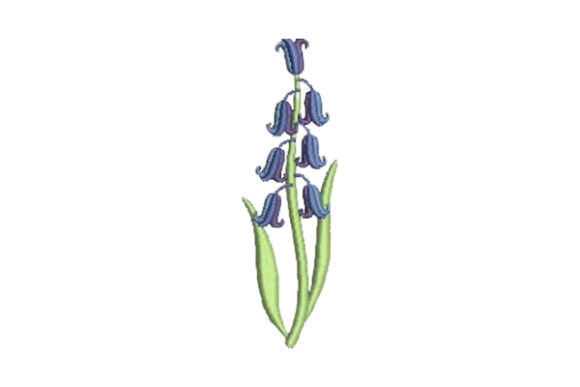
As an embroidery designer who’s digitized and stitched hundreds of floral motifs for small businesses—from neighborhood bakeries to indie florists—I immediately recognized Bluebell’s quiet confidence. The name alone evokes delicacy, seasonal charm, and gentle authenticity—no loud graphics, no forced trends. Based on its description as “a lovely floral embroidery [that] gives a new fresh look” and “spring vibe,” Bluebell reads as friendly yet refined, handmade but polished, and distinctly approachable. It sits comfortably in the Single Flowers category—not overly complex like a bouquet, not too minimal like a single stem icon—but just right for brands that value sincerity over flash.
Real-World Performance Across Small Business Merchandise
Bluebell shines where subtlety builds trust: embroidered patches for café aprons, chest accents on boutique staff uniforms, sleeve details on handmade studio tees, or minimalist cap fronts for local pet brands. Its clean floral shape translates beautifully into a embroidered patch—especially when backed with twill or chenille for durability. On cotton tote bags, it adds artisanal warmth without overwhelming the fabric. For bakeries or florists, Bluebell works elegantly as a product label accent on reusable packaging or as a subtle motif stitched beside a shop name on custom apparel.
Because it’s designed as a machine embroidery design, Bluebell holds up well across varied applications: cap embroidery (front or side), apron embroidery (pocket or corner), and even small-batch product tags. Its balanced proportions allow it to scale down for 2-inch patches while retaining legibility—critical when your Etsy customers order branded merch for pop-up markets or wedding favors. As part of your broader design assets, Bluebell pairs seamlessly with clean sans-serif logotypes or handwritten brand fonts, reinforcing visual consistency without competing for attention.
Where to Use Bluebell Thoughtfully—Not Everywhere
While versatile, Bluebell isn’t universally bulletproof—and that’s okay. As a professional, I advise caution when applying it to highly curved surfaces like cap crowns (where distortion can blur petal definition) or textured fabrics like heavy canvas or looped terry cloth (which may mute fine stitch detail). If your small business merch includes dark uniforms—think navy chef coats or charcoal linen aprons—verify thread color contrast early; pastel blues or lavenders may recede unless paired with crisp white or metallic silver thread.
Also, avoid shrinking Bluebell below 1.5 inches without testing. At tiny sizes, delicate outlines risk stitching loss or “fill bleed,” especially if the original embroidery file carries moderate stitch density. And while it’s lovely on smooth cotton or twill, don’t assume it auto-adapts to fleece or performance knit—those require stabilizer adjustments and possibly re-digitizing for optimal drape and coverage.
How Bluebell Strengthens Brand Identity—Beyond Decoration
For small business owners, every embroidered detail shapes perception. A well-executed Bluebell says: *We care about craft. We honor seasonality. We’re rooted, not rushed.* That impression directly supports brand identity—particularly for handmade product sellers, creative studios, and local service brands. Customers subconsciously associate thoughtful embroidery with quality and intentionality, boosting perceived value and encouraging repeat engagement.
On customer-facing items—like branded tote bags handed out at farmers’ markets or embroidered gift tags on bakery boxes—Bluebell becomes a tactile signature. It invites touch, slows scrolling, and fosters memory. Unlike generic clipart, this digital embroidery file feels intentional and ownable. When repeated across staff uniforms, packaging, and social media mockups, it creates cohesive recognition—even before your logo appears.
Practical Designer Notes Before You Stitch
Before committing Bluebell to your next batch of small business merch, follow these field-tested steps:
- Test in black and white first—to assess contrast, balance, and silhouette clarity without color distraction.
- Check small patch viability—hoop and stitch a 1.75-inch version on your target fabric to confirm petal definition and edge sharpness.
- Review thread color pairings—especially for light/dark fabric variants. Try matte cottons alongside high-sheen rayons to see how light plays across petals.
- Inspect spacing and underlay—tight petal clusters need solid underlay to prevent puckering on stretchy knits or lightweight linens.
- Confirm hoop size compatibility—if your embroidery machine uses smaller hoops (e.g., 4x4”), verify Bluebell fits without scaling or trimming.
- Test on real fabric + stabilizer combo—not just scrap swatches. Run a full-stitch sample on your actual apron twill or tote canvas.
- Create a printable mockup for client approval—showing Bluebell scaled correctly on cap front, tote corner, and uniform chest placement.
- Compare beside existing design assets—does it harmonize with your current logo, typography, and color palette—or does it introduce unintended visual tension?
- Confirm commercial licensing before production—since this is a commercial embroidery project, ensure your purchase grants rights for resale, branding, and unlimited physical use.
Final Thought: Bluebell Is More Than a Flower—It’s a Brand Whisper
In a market flooded with bold logos and algorithm-chasing graphics, Bluebell offers something rarer: quiet distinction. It doesn’t shout—it invites. It doesn’t dominate—it complements. For small business owners building authentic connections through custom apparel, apron embroidery, tote bag design, or hand-finished product touches, Bluebell delivers professional polish with handmade heart. Used intentionally—as part of a considered Embroidery strategy—it becomes more than decoration. It becomes recognition. It becomes trust. It becomes yours.